01
Step 1: Sort what you have
- Good condition desks, chairs and storage: reuse or resale.
- Broken or worn items: stripped down and recycled where possible.
- Anything with a plug: this counts as electrical waste, not furniture.
02
Step 2: Check the carrier
As a business you are responsible for your waste until it is handled properly.
- Ask for their waste carrier registration number.
- Make sure you get a waste transfer note.
- Avoid cash-in-hand removals. Fly-tipped furniture can be traced back to you.
03
Step 3: Don't forget what is inside
- Empty pedestals and filing cabinets before collection.
- Old files go for shredding, not in the furniture load.
- Laptops left in drawers still hold your data.
04
Step 4: Do it all in one visit
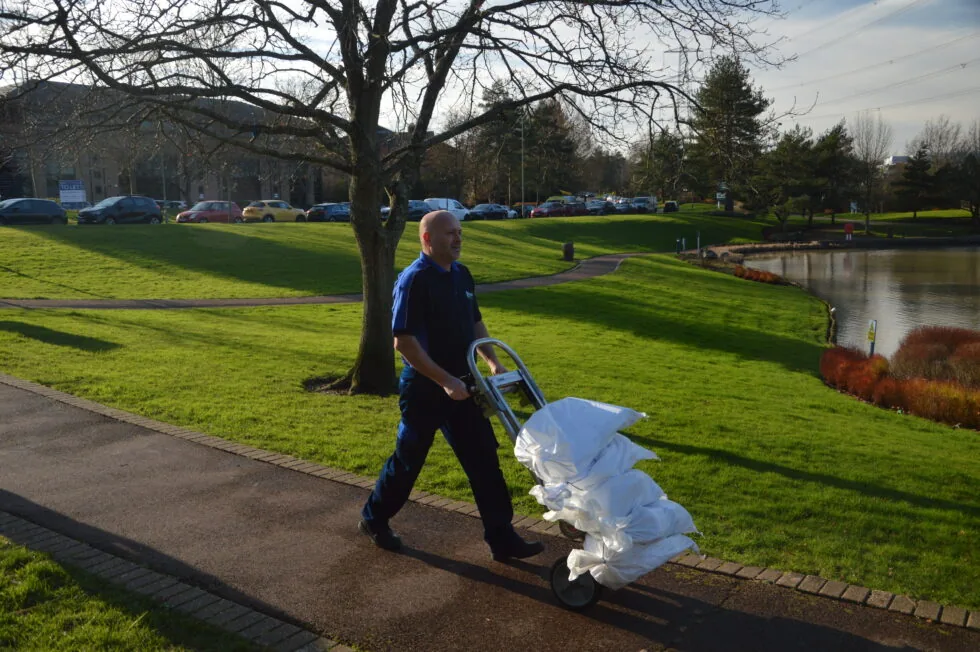
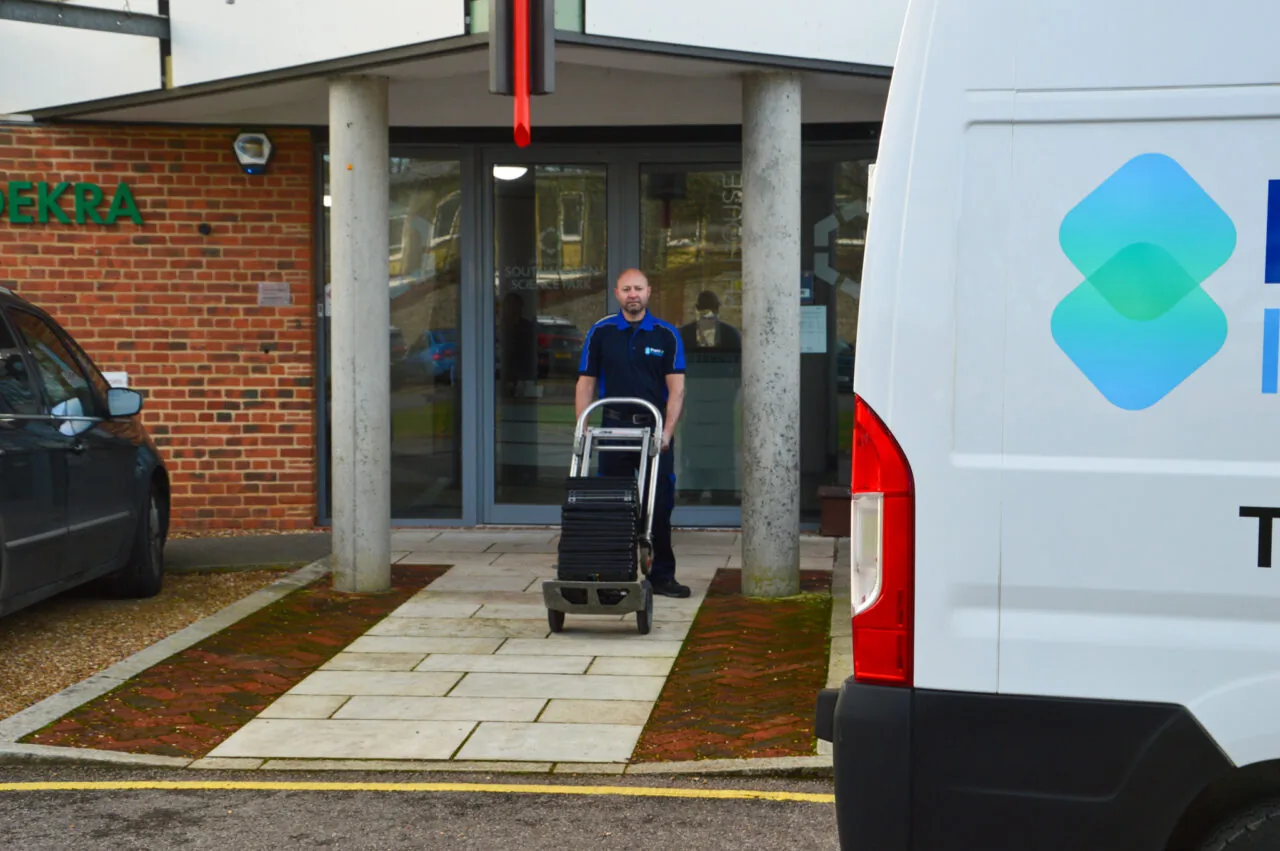
Furniture is rarely the only thing leaving. One team taking furniture, IT and confidential paper means one booking, one lift slot and one set of paperwork.
Common questions
Can office furniture be recycled?
Much of it can. Metal frames, wood and plastics can be separated and recycled, and good condition items can often be reused.
Do I need a waste transfer note for office furniture?
Yes. Business waste needs a waste transfer note from a registered carrier, and you should keep it on file.
Can you take the computers and files at the same time?
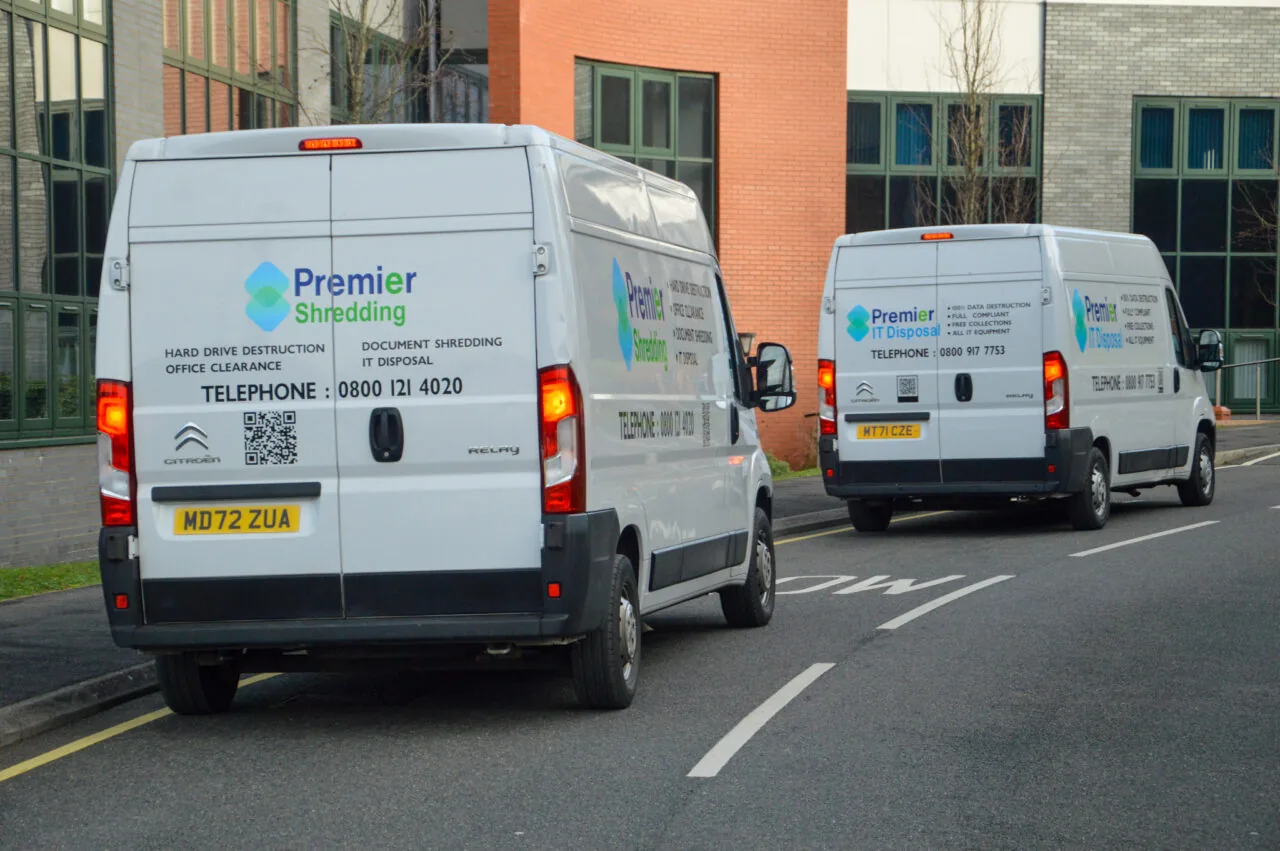
Yes. Premier clears furniture, IT equipment and confidential paper in one visit, through Premier IT Disposal and Premier Shredding.
One team. Everything cleared.
Furniture, IT and confidential paper, with the paperwork.